

Scientific research and industrial practice system
A complete collaborative closed loop from AI research systems to cross-border industrial verification
(1).png)
Part 1 | System Overview
At Kuqi Labs, we build not just research projects, but a sustainable system for research and industry practice.
The system consists of four core modules:
→ AI Intelligent Scientific Research System → Domestic Scientific Research Training and Teaching Base → International Scientific Research Collaboration Network → Japanese Industry Verification and Transformation System
Through structured collaboration, a complete closed-loop path is formed, from project construction and experimental verification to industry integration.
Part Two | CodeLife.ai Intelligent Scientific Research System
CodeLife.ai is an independently developed AI-driven scientific research modeling and training system. Through the deep integration of algorithms and life systems, it constructs a structured scientific research path design mechanism, supporting the entire process of modeling and optimization from problem decomposition to experimental verification.
Core Competencies
• Structured decomposition and path construction of scientific research problems • Experimental scheme modeling and variable extrapolation optimization • Data analysis and system iteration support • Structured training framework for international competition topics
The process of exploring fundamental questions → modeling pathways → experimental verification → optimizing results enhances research efficiency, verification stability, and the ability to translate findings into practical applications. It serves as the core driving engine for research training and life science modeling systems.
(1)_edited.jpg)
%20(1)(1).jpg)
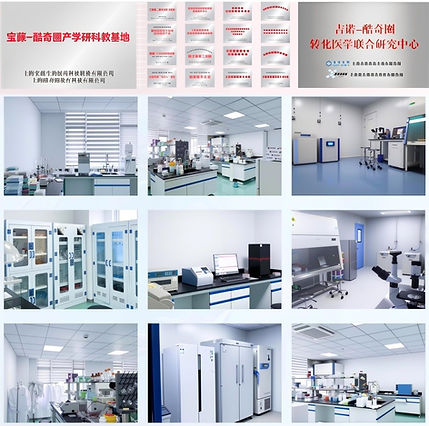
Part Three | Shanghai Scientific Research Training and Teaching Base
The platform has established two core teaching and research centers and a medical translation center in Shanghai, serving as important nodes for domestic scientific research training, project practice, and research-based learning. These centers not only undertake teaching functions but also bear the structural tasks of scientific research pathway practice and output.
Functional positioning includes:
• Real-world research project practice and experimental operation support • Implementation of training paths for international competitions such as iGEM/ISEF and domestic whitelisted competitions • Offline practice collaboration with the AI research system (CodeLife.ai) • Co-construction of curriculum system and iteration of teaching and research models • Immersive training system for scientific research and laboratory work
The teaching and research base is not just a teaching space, but an important support node for the practice of scientific research paths and the output of results.
It connects AI systems with international research networks and is a crucial structural pillar of the platform in China.
Part Four | International Scientific Research Collaboration Network
The platform integrates domestic and international universities, research institutions, international competitions, and academic resources to build a sustainable cross-border research collaboration network. This network not only supports project advancement but also provides researchers with a clear path for international development.
Core collaborative directions include:
• Continuous guidance system for international gene engineering competitions such as iGEM • Support from domestic and international science and technology innovation competitions such as ISEF, Shing-Tung Yau, and CASTIC • Alignment of research paper publication pathways and academic methodologies • Cross-border experimental collaboration and technical standard alignment • Joint projects and resource links with overseas research institutions • Channels for recommending international research internships and research positions
From project design to international evaluation systems and talent development pathways, a complete scientific research loop is formed.
.jpg)
.jpg)
Part Five | International Industry Verification and Transformation System
The ultimate value of scientific research results lies in their verification and application in real-world scenarios. The platform leverages laboratories in Tokyo and Hong Kong, along with industrial production lines, to build an industry verification support pathway.
Core competency structure:
• Technical verification and stability testing of experimental results • Small-scale sample development and process optimization testing • Technology transfer support in regenerative medicine and daily chemical anti-aging • OEM/ODM product co-development and production system integration • Feasibility assessment of scientific research results industrialization path
Through experimental verification and factory line collaboration mechanisms, we support the transformation of scientific research results from conceptual models to real-world application scenarios, forming a closed-loop technology system with the capability for industrial implementation.